Introduction to Cartonization
The cartonization guide for shippers and fulfillment operations. Learn what it is, why it matters, and which cartonization software is right for your business.
What is Cartonization?
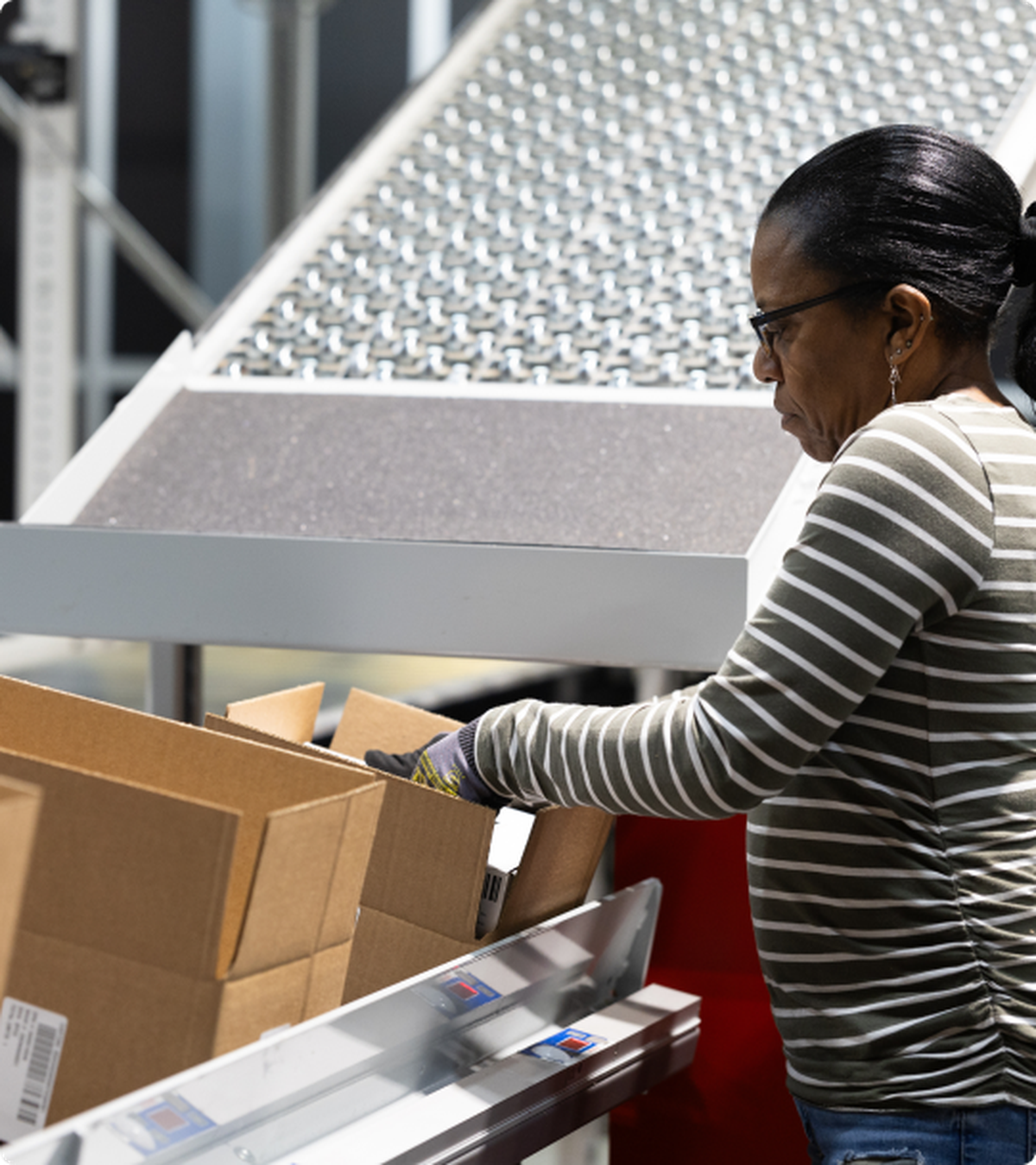
Cartonization is the step in an order lifecycle where the correct box configuration is determined for optimal shipping. Some cartonization engines can factor in cost to find the least expensive way to pack an order. Cartonization is the decision behind every parcel: which box or mailer to use, how to pack it, and how to sequence the items inside. Cartonization is also referred to as cubing, packing tetris or a packing algorithm.
Cartonization needs data and packing rules to work effectively. Here are some pieces of information that are important to implement any form of cartonization:
Item dimensions (length, width, height, weight)
Box (carton) or mailer dimensions and available inventory
Item rules, business constraints, and carrier requirements
Cartonization sits at the intersection of logistics operations and cost management. Get it right and it pays for itself. Get it wrong and you're losing money in every box you ship.
How it Works
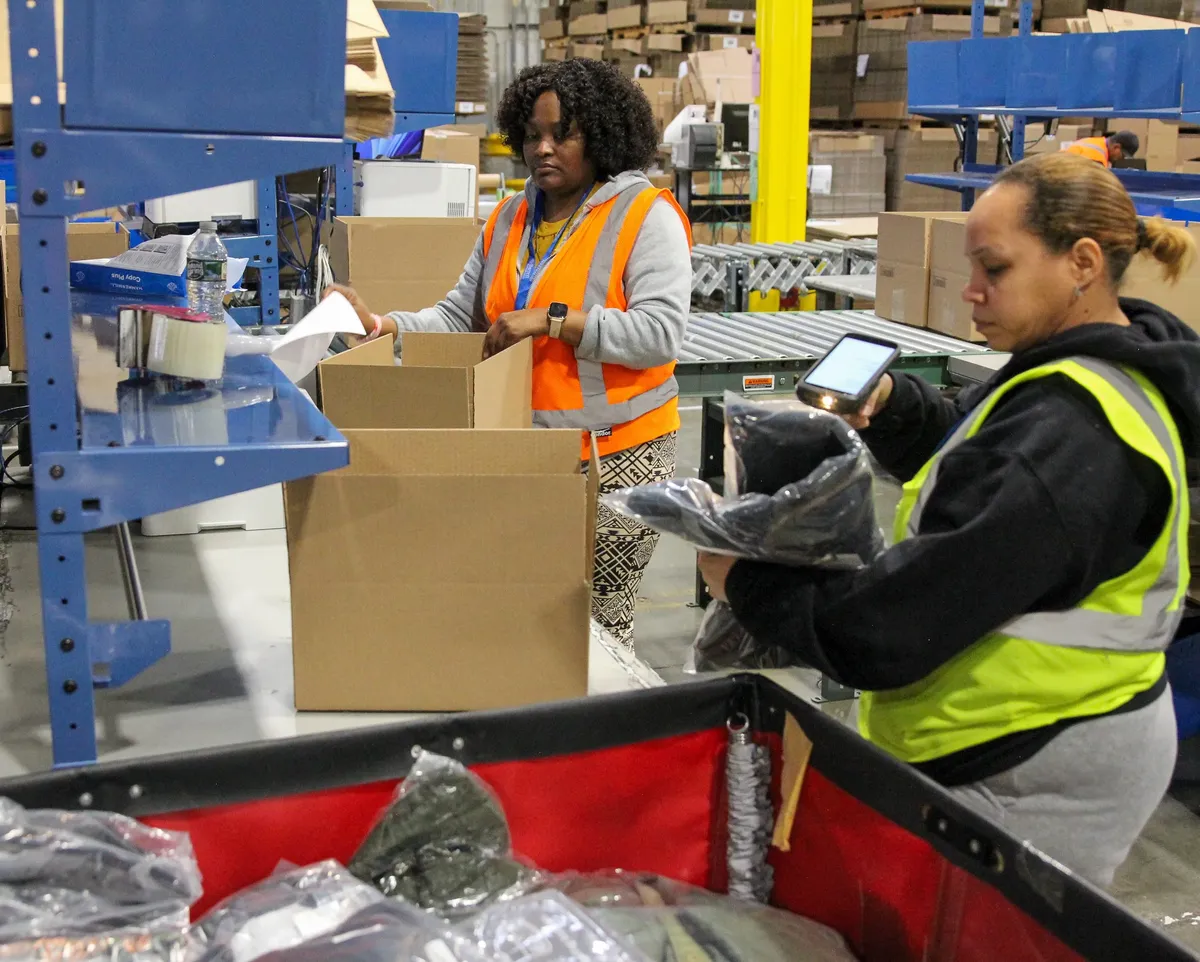
This is how cartonization works at a high level:
Order data enters the cartonization engine. The data includes SKUs, item dimensions, weights, and item rules (for example, fragility or hazmat).
The algorithm evaluates available box options. Some engines can incorporate carrier rate structures, DIM divisors, and surcharge thresholds as well.
The engine selects the appropriate packing configuration.
Packing instructions and box selection are sent to the packing station for execution.
At its simplest, cartonization removes guesswork from the packing station. At its most sophisticated, it integrates real carrier rate data, 3D spatial optimization, and actual business rules to ensure every order ships in the most cost-effective configuration possible, not always just the smallest box.
The term doesn't appear in a standard dictionary but it's increasingly common in fulfillment operations, supply chain technology, and carrier discussions. The ecommerce market is predicted to grow to $7.9 trillion by 2027, according to Forbes 2026. As volume continues to increase and carriers refine their pricing models, cartonization is becoming more widely adopted across the supply chain.
What Problem Does Cartonization Solve?
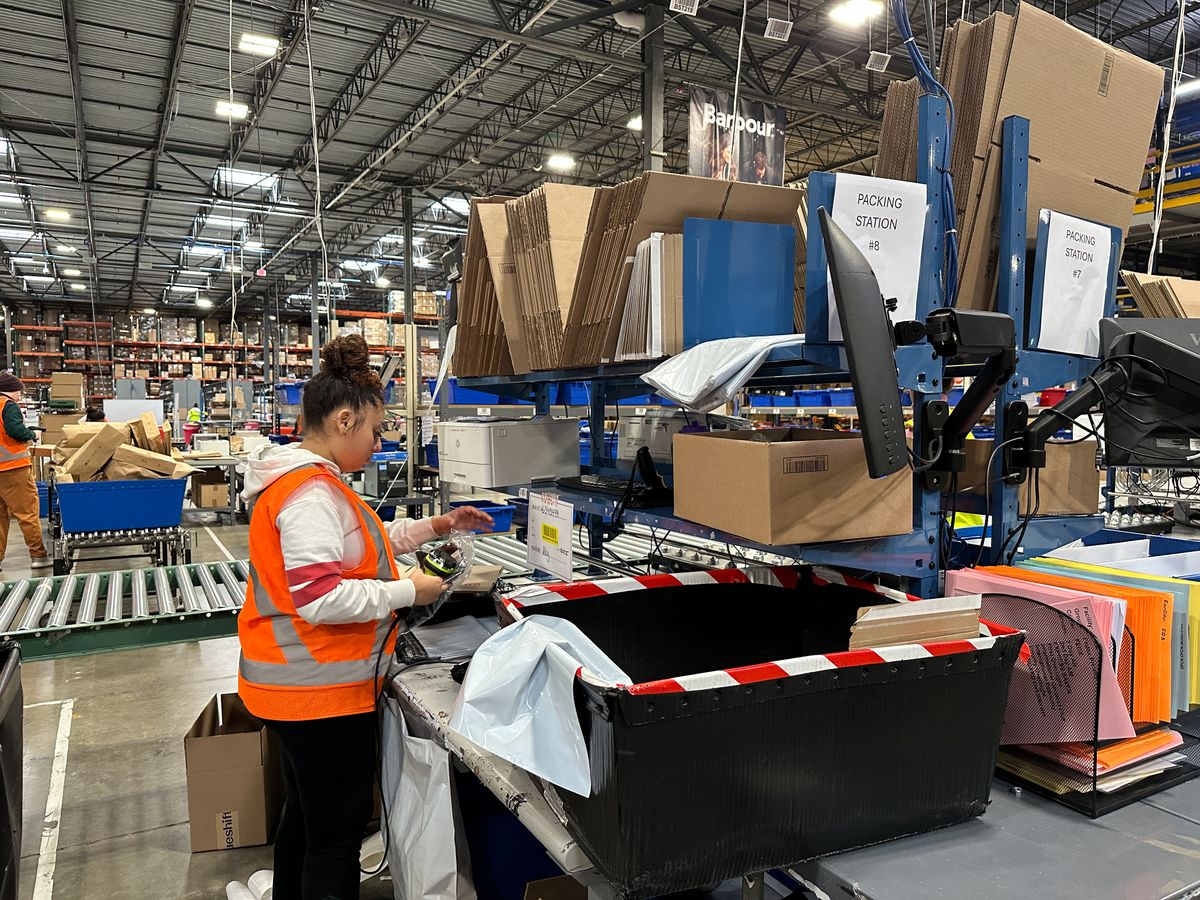
In many fulfillment operations, once an order reaches the packing station, the packer is responsible for determining which box to use, how the items should be arranged, whether everything will fit, and whether the package can safely withstand transit.
Without cartonization, those decisions are made by a person, under time pressure, with incomplete information, usually defaulting to a box they've used before or a box they can see will fit all of the items. In a high-volume operation those decisions get made thousands of times a day. Multiply imperfect packing decisions by order volume, carrier rate complexity, and the cost of material and labor, and the problem compounds fast.
The Core Problems Cartonization Addresses
Inconsistent box selection across packers, shifts, and locations
Oversized boxes that trigger dimensional (DIM) weight surcharges
Improper packing of fragile or irregular items, leading to damage claims
Excess void fill material that adds cost and waste to every shipment
New SKUs requiring manual re-training or rules updates
No visibility into what the packing operation is actually costing
Robotic picking systems which are underutilized due to inaccurate dimensions or inconsistent box configurations
Inefficient store replenishment driven by poorly packed shipments
Cartonization replaces judgement calls with data driven instructions. It gives every packer, from the ten-year veteran to the seasonal temp, the same answer for every order. That consistency is the foundation of packing control.
Types of Cartonization
 Rule of Thumb (Manual)
The most basic form of cartonization relies on explicit, manually-written rules: "All items in product category X go in Box 3. Items over 5 lbs go in Box 7." This might live in a spreadsheet or literally a laminated sheet on the warehouse wall.
It works, but doesn’t really scale. New SKUs, seasonal product mixes, and business rule changes all require manual reconfiguration. This might be sufficient for low volume shippers (less than ~60,000 orders annually), but as your business grows, this will constrain improvement and efficiency.
 Volumetric Comparison (Most WMS)
Volumetric cartonization logic is built into most Warehouse Management Systems (WMS). Typically referred to as liquid fill cartonization, this approach to packing sums up the total cubic volume of the items in an order and “pours” the items into the smallest box with enough volume to contain the order.
This method comes with known limitations when applied to a variety of SKUs. For example, a 4-foot shovel may have a lower combined volume than a box, but that doesn't mean it fits. A volumetric comparison doesn't model physical reality. It also can't determine when two smaller boxes would be cheaper than one large one.
This approach may be sufficient for operations that ship similarly sized and shaped products. However, operations with diverse SKU catalogs or irregularly shaped items are more likely to encounter situations where volumetric comparisons alone produce inaccurate or impossible packing decisions.
 3D Cube
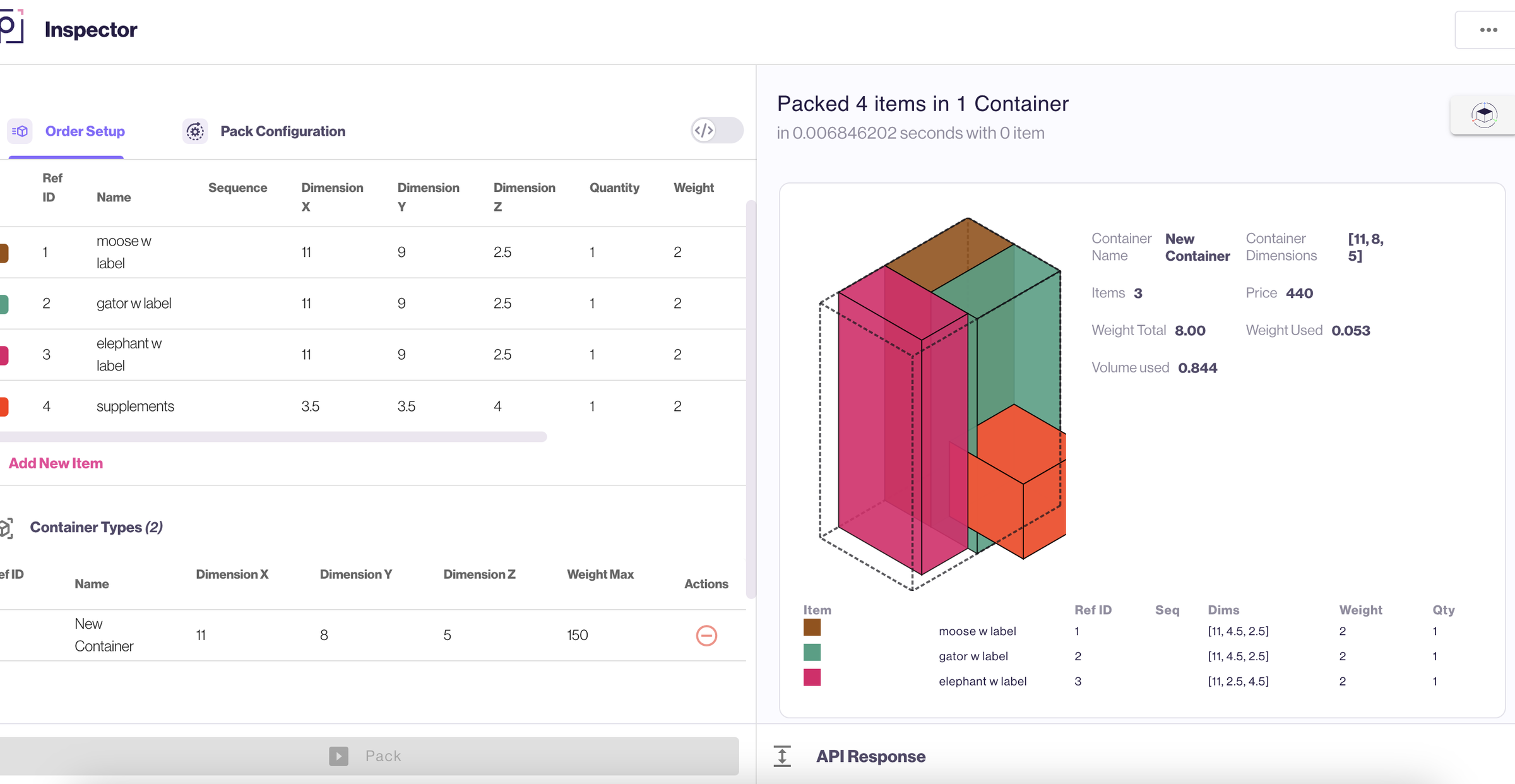
3D cube cartonization evaluates how items physically fit in a container in three dimensions, accounting for orientation, stacking, weight distribution, fragility, compressibility, and other packing rules. It handles new SKUs without reconfiguration. This improves the density of packs and ensures items fit within the right box configuration.
 3D Cube + Cost Awareness (Paccurate)
Some cartonization engines, including Paccurate, extend three dimensional packing by incorporating carrier pricing into the packing decision. Instead of finding the smallest box, this approach finds the most cost effective configuration, factoring in rate tables, DIM weight, shipping zone, material cost, and labor. In some cases, the result may be counter-intuitive. For example, shipping an order in two smaller boxes can be cheaper than one large one. Evaluating these variables simultaneously is impossible for a human packer to do manually in a high-volume operation.
3D + cost aware cartonization is meant for enterprise shippers facing high annual shipping volume and seasonal spikes in demand. Brands and 3PLs use modern cartonization engines to reduce costs and waste in the supply chain while delivering a better experience to their customers.


Feature Comparison
Feature | Rule of Thumb | Volumetric WMS | 3D Cube | 3D + Cost Aware |
|---|---|---|---|---|
Setup Required | Manual Rules | Minimal | Minimal | Minimal |
3D Spatial Accuracy | No | No | Yes | Yes |
Handles Complex SKUs | Partial | No | Yes | Yes |
Integrates Carrier Rates | No | No | No | Yes |
Cost Optimization | No | No | No | Yes |
Labor Cost Modeling | No | No | No | Yes |
Scales without Reconfiguration | No | Partial | No | Yes |
Step-by-Step Packing Instructions | Manual | No | Yes | Yes |
Paccurate customers average a reduction of one square foot of corruagted per carton and 20% less fill material. At scale, that's a significant material cost reduction before counting the shipping savings.
Why Getting Cartonization Right Matters
Every shipping decision cascades. The wrong box doesn't just cost a few extra cents in corrugated. It can trigger dimensional weight surcharges, increase material costs, slow throughput, and make for a poor customer experience when products arrive damaged.
The Cost Drivers Most Teams Miss
Dimensional Weight Pricing
Major carriers, including UPS, FedEx, and USPS, price packages based on the greater of actual weight or dimensional weight. DIM weight is calculated as the package's volume divided by a carrier-specific DIM divisor. An oversized box filled with small items will be priced as though it weighs significantly more than it does based on its physical dimensions. This is one of the fastest ways to erode shipping margins, and it happens automatically with every oversized package.
 Carrier Rate Table Incentives
Negotiated rate tables aren't always flat. Depending on the enterprise, carrier rate tables reward certain weight bands, package sizes, and shipping zones differently. A package that crosses a weight threshold by a few ounces might jump an entire pricing tier. Most packing decisions are made without any visibility into this, so packers optimize for fit rather than cost.
 Labor and Error Costs
Without clear packing instructions, packers make judgment calls. Some of those calls are wrong: wrong box, wrong fill, items improperly secured. A shipment that fails a quality check has to be repacked. A damaged item triggers a claim, a replacement, and a re-shipment. Each of those outcomes costs more in labor hours and materials on top of the original pack, and they add up fast at scale.
 Box Inventory Waste
Keeping too many box sizes in inventory ties up working capital. Not to mention, stocking the wrong sizes forces packers to make do with a box that is too large, too small, or structurally unsuitable for the product. Box suites often grow organically over time, accumulating sizes added for a specific product launch or seasonal promotion, and rarely get re-evaluated down the road. The result is a bloated inventory that does not reflect the actual order profiles moving through the facility today. When inventory isn’t regularly reviewed, boxes sit stocked on shelves taking up valuable space in the fulfillment center.
Learn how to identify the right size boxes for your operation.
What Industries Use Cartonization?
Cartonization spans a wide range of industries and use cases. Here's how it's used for brands, distributors, 3PLs, and other industries as well as what cartonization specifically solves for each.
Ecommerce Retailers
Ecommerce retailers have to manage large SKU catalogs which are constantly changing. A product launch, a seasonal item or even a supplier can introduce new items that break existing packing rules. Manual rules-based cartonization requires someone to update the logic every time the SKU catalog changes. At scale, this maintenance burden becomes a full-time problem.
Order profiles also tend to be highly variable. Enterprise shippers could be dealing with one order containing a single lipstick and the next a coffee maker. Add apparel to the mix and you’re dealing with a whole other dimension of packing rules. No two orders are the same, and a packing approach optimized for one order type, won’t work across the operation.
During seasonal spikes such as peak, additional labor can often slow down the process if there isn’t a solid foundation. Retailers often double or triple headcount with temporary workers who don’t have the experience required to make the “right” packing decisions under pressure. Cartonization replaces this institutional knowledge with instructions. A seasonal temp and a tenured veteran can follow the same steps and deliver the same result. Packing quality will hold, regardless of who is at the pack station.
Margins in retail are thin, and shipping is one of the largest variable costs. A small reduction in cost per shipment, applied consistently across high order volumes, compounds into significant annual savings. Conversely, even modest inefficiencies in box selection, applied at the same scale, erode margin quietly and continuously.
There's also a damage reduction angle that directly affects client retention. Returns are a major challenge for retailers. Without proper packing considerations, products are more likely to shift, collide, or break during transit. This directly impacts customer satisfaction and threatens your clients' long-term business success.
Learn more about cartonization for Ecommerce Retailers.
Third Party Logistics Providers (3PLs)
With every client comes different packing and packaging requirements. Some ship fragile products, while others deal with hazardous materials,oversized items or temperature-sensitive goods. Others want their orders packed in custom branded boxes with branded inserts. Managing these requirements can be especially challenging for multi-client 3PLs. As the number of customers and packing rules grows, maintaining consistent packing decisions across operations becomes increasingly complex.
The scale of the market makes this competitive. With new third-party logistics providers across the U.S. and more entering the market every year, standing out is imperative. Most 3PLs competing for the same clients are offering comparable labor rates, facilities, and WMS capabilities. Cartonization is one of the few operational differentiators that delivers measurable client value and that clients can see in their own shipping invoices.
3D cube + cost-aware cartonization allows 3PLs to offer tailored solutions without exhausting internal resources to build a product that already exists. As client requirements evolve, so should your cartonization logic. Instead of rebuilding packing rules from scratch, 3D cube + cost-aware cartonization lets you scale with your customers.
For 3PLs looking to formalize cartonization as a service line, choosing boxes based on cost instead of just size generates savings that can be tracked and shared as metrics with customers, converting an operational capability into a billable, reportable value-add.
Unique Use Cases
Cold Chain Shipping
Cold chain shipping introduces constraints beyond simply fitting products into a box. Temperature-sensitive shipments require insulation, refrigerants such as dry ice or gel packs, and product-specific packing rules. Those requirements directly influence which container can be used and how products are arranged within it.
Daily Harvest, for example, ships frozen products alongside dry ice, requiring packing decisions that account for both product fit and temperature-control requirements. Every product change made maintaining those packing rules increasingly complex. The result was escalating transportation costs with every new SKU added to the catalog.
By implementing modern cartonization, Daily Harvest identified an 18% improvement in box selection.
Learn more about cartonization for cold chain.
Shopping Cart Integration
Shipping cost estimates at checkout are almost always wrong. Most platforms calculate an estimated shipping cost based on order weight and a flat rate assumption. The actual cost determined by the carrier after the order ships, based on DIM weight, zone, and the box actually used is often higher. That gap shows up as margin erosion on every order where the estimate was too low.
Checkout abandonment compounds this problem. Customers who see a shipping cost at checkout and then receive a different charge on their invoice lose trust. Customers who see unexpectedly high shipping costs at checkout abandon their carts. Both outcomes are avoidable when the estimated shipping cost is based on how the order will actually be packed and shipped.
Real-time, cost-aware cartonization at checkout closes that gap. By determining the box configuration before the order is confirmed, the shopping cart has an accurate shipping cost to display, one based on actual carrier rates for the actual package that will be shipped. The estimate is no longer an approximation. It's a calculation based on real data.
For operations teams, this has a secondary benefit: it eliminates the internal reconciliation work that comes from persistent gaps between quoted and actual shipping costs. For finance teams, it makes shipping cost modeling more reliable. For customers, it builds the kind of checkout transparency that reduces abandonment and increases trust.
Learn more about direction integration with the shopping cart.
Robotic Fulfillment and Goods-to-Person Automation Systems
Goods-to-person systems like AutoStore, and AMR-based fulfillment environments are designed to maximize throughput and storage density, but their efficiency depends on the accuracy of the data feeding them. Cartonization is one of the most underutilized inputs in robotic fulfillment design and optimization.
For AMR deployments using a pick-to-carton strategy, carton dimensions directly determine how much work each robot can carry per trip. When carton sizes are optimized around the shelving configuration of the AMR rather than legacy box assumptions, operations can fit more cartons per shelf per robot, increasing pick rates and reducing the labor cost per order without adding robots or expanding the facility.
For AutoStore, the impact starts before the system is built. Traditional grid sizing relies on cubic velocity estimates that frequently result in over- or under-sized investments. Modern cartonization simulation replaces those estimates with item-level precision, identifying how products actually pack together inside bins and what grid configuration best fits the real product mix. The result is a more accurate capital investment from day one, with less risk of building too large or too small. Once live, the same cartonization data helps maximize bin utilization within the existing grid, deferring the need for costly expansion.
In both environments, cartonization turns packing data into a planning input, giving operations teams the precision to right-size automation investments before build-out and maximize the return on those investments once they're running.
Who Owns Cartonization?
Cartonization sits at the intersection of several teams, which is exactly why it often falls through the cracks or gets owned by the wrong person for the wrong reasons. Understanding how these teams work together to prioritize cartonization as a strategic project will deliver results across many functions and ultimately, your bottom line.
Typical Stakeholders
VP of Operations
Usually the economic buyer and primary champion. They feel the pain of labor inefficiency most and are responsible for the team performance metrics that cartonization directly affects: throughput, packaging material usage, error rate, cost per shipment.
Why should Operations Leaders care?
Operations leaders are often deep in evaluating larger automation investments such as robotics, conveyor systems or even full scale warehouse redesigns which have long implementation timelines and significant capital requirements. Cartonization is rarely on the shortlist because it doesn't look like automation. However, it delivers measurable cost reduction in weeks, not years, and it integrates seamlessly into existing processes. For a VP looking for near-term wins while a bigger transformation is underway, cartonization is a strong Phase 1.
Supply Chain & Logistics Leadership
Supply chain leaders are typically focused on carrier negotiations, contract renewals, and rate benchmarking as the primary levers for reducing shipping costs. Cartonization doesn't always register as a supply chain tool because it looks like a warehouse problem.
Why should Supply Chain Leaders care?
The rate table data this team already owns is exactly what cost-aware cartonization uses to make smarter packing decisions. Supply chain leaders should be in the conversation because the ROI gets built on real carrier data, and the results are immediately visible in the numbers they already track.
IT / Systems Integration
IT is responsible for connecting cartonization to existing systems, typically an OMS, WMS, or ERP. The right cartonization engine is a clean API drop-in, not a rip-and-replace of existing infrastructure.
Why should IT Teams care?
IT teams often deprioritize cartonization because it gets bundled with larger platform migrations or WMS upgrades already in the queue. The assumption is that cartonization will get addressed when the bigger project lands. In practice, modern cartonization engines integrate via API and don’t require a platform change to deploy. IT doesn't need to wait for a larger initiative to move forward. In many cases, cartonization can be live and returning value well before the next major systems project reaches go-live.
Warehouse & Operations Managers
Warehouse and Ops Managers are the team closest to the packing stations. They feel the impact of poor cartonization daily as packers improvise, exceptions pile up, and damage claims arise. They often have the clearest understanding of the problem and the most credibility in advocating for a fix.
Why should Warehouse Managers care?
Warehouse managers frequently know something is wrong but lack the language or data to escalate it as a solvable systems problem. The daily friction gets absorbed as a staffing issue or a training issue rather than a technology gap. Cartonization gives this team a direct line between a specific operational pain and a specific solution, with results they can measure at the station level. They're often the most effective internal advocates once they understand what cartonization actually does.
Packaging Engineers
Packaging Engineers are not present in every organization, but are invaluable when they are. They use cartonization simulation to rationalize box inventory and validate that new product lines will pack efficiently before they go live.
Why should Packaging Engineers Care?
When packaging engineers are involved, they're often working in isolation from the broader fulfillment conversation. Their insights into product dimensions, fragility, and carton fit rarely make it into the packing station in a systematic way. Cartonization closes that gap, turning packaging engineering inputs into real-time instructions that reach every packer on every shift. Organizations that connect these two functions early tend to see faster ROI and fewer edge-case exceptions after launch.
The most successful cartonization implementations involve ops, logistics, and IT at the table together. When a single team owns it in isolation, the integration gaps or the business case gaps tend to kill momentum.
The Benefits of Cartonization
Shipping Cost Reduction
Shipping cost is the most immediate and measurable benefit. Cost-aware cartonization optimizes against actual carrier rates finding configurations that minimize total spend, not just box size. Teams typically see savings on transportation costs, though results depend on order mix, carrier contracts, and baseline packing performance.
 Material Savings
Right-sized boxes require less corrugated and less void fill. Cartonization helps customers average a reduction of roughly one square foot of corrugated per box. Over time, these reductions may lower packaging material consumption and associated costs.
 Labor and Automation Efficiency
Clear packing instructions reduce the time packers spend selecting packaging or determining how items should be packed. In addition, just as humans are directed with packing instructions, robots or automation can be better utilized with cartonization data to inform grid size or shelf spacing to maximize capacity and increase throughput from picking to packing.
Consistency at Scale
A single algorithm makes the same correct decision across every packer, every shift, every facility, across your entire fulfillment network. That consistency enables reliable cost modeling, accurate shipping quotes at checkout and when paired with a rate shopping tool, and a predictable customer experience.
 Sustainability Impact
Packaging decisions influence material consumption and transportation efficiency. Using packaging that more closely matches order characteristics may reduce corrugated usage, void fill, and unused package volume. These factors can contribute to broader sustainability initiatives, though the overall environmental impact depends on many variables within the supply chain. Right-sized packages help maximize the cube on a truck, this leads to less trucks on the road and lower scope 3 emissions.
 Customer Experience
Customers shouldn’t be left to deal with extra packing materials to dispose of or recycle. Modern cartonization ensures orders are shipped in the right-size boxes to deliver a better unboxing experience for customers. Not only does an appropriately sized box or mailer reduce waste, it also reduces the risk of damaging items in transit which is a win-win for customers and shippers alike.
What to Look For In a Cartonization Provider
Not all cartonization providers are built the same. The most capable solutions go beyond basic box selection to offer a full suite of capabilities: simulation for testing box changes before they go live, monitoring to track packing performance over time, packing orchestration across the fulfillment network, and cost-aware cartonization that evaluates live carrier rate tables rather than estimating. When evaluating providers, look for a platform that covers the full lifecycle of packing operations, not just the moment of box selection.
Equally important is how the solution fits into your existing operation. API-first architecture means the cartonization engine connects cleanly to your WMS, OMS, or ERP without a rip-and-replace implementation. Cloud-based deployment versus on-premise installations depend on the operational requires, however on-prem requires ongoing IT maintenance which make updates slower to deploy. Look for a provider that gives your operations team direct control over packing rules and box configurations through a management interface, so rule changes don't require an IT ticket or a vendor support call. The right provider should also be a partner in implementation and ongoing improvement, helping you build the ROI case before you commit and staying engaged after go-live as your order mix and carrier contracts evolve.
What ROI Should You Expect from Cartonization?
ROI from cartonization compounds with order volume. The largest savings come from three sources:
Shipping cost reduction (carrier rate optimization and DIM weight control).
Material savings (less corrugated due to smaller boxes, less void fill).
Labor efficiency (faster pack rates/increased throughput).
Monthly Order Volume | Estimated Monthly Savings | Typical Payback Period |
|---|---|---|
10,000 Orders | $5,000-$15,000 | 3-6 months |
100,000 Orders | $30,000-$50,000 | 3-4 months |
1,000,000 Orders | $80,000-$150,000 | 2-3 months |
**Illustrative ranges based on Paccurate customer data. Actual savings depend on carrier mix, current box utilization, and order complexity.
Betterware, a direct-to-consumer home goods retailer in Mexico, provides one example of 3D cube plus cost-aware cartonization's operational impact. Working with a limited box assortment and a carrier agreement where each additional box increased shipping costs, the business implemented cartonization to improve box utilization and increase the number of items packed into each shipment. The result was immediate ROI, fewer boxes shipped per order, and ongoing transportation and corrugated material savings as order volumes continued to grow.
Not sure where your operation stands? The Packing Assessment takes 10 minutes and gives you a benchmark score against operations at your volume. Run the free assessment.
Case Studies
The clearest way to understand the impact of cartonization is to see it in action. These customers are leveraging Paccurate to reduce costs and waste in the supply chain.
Cartonization for 3PLs
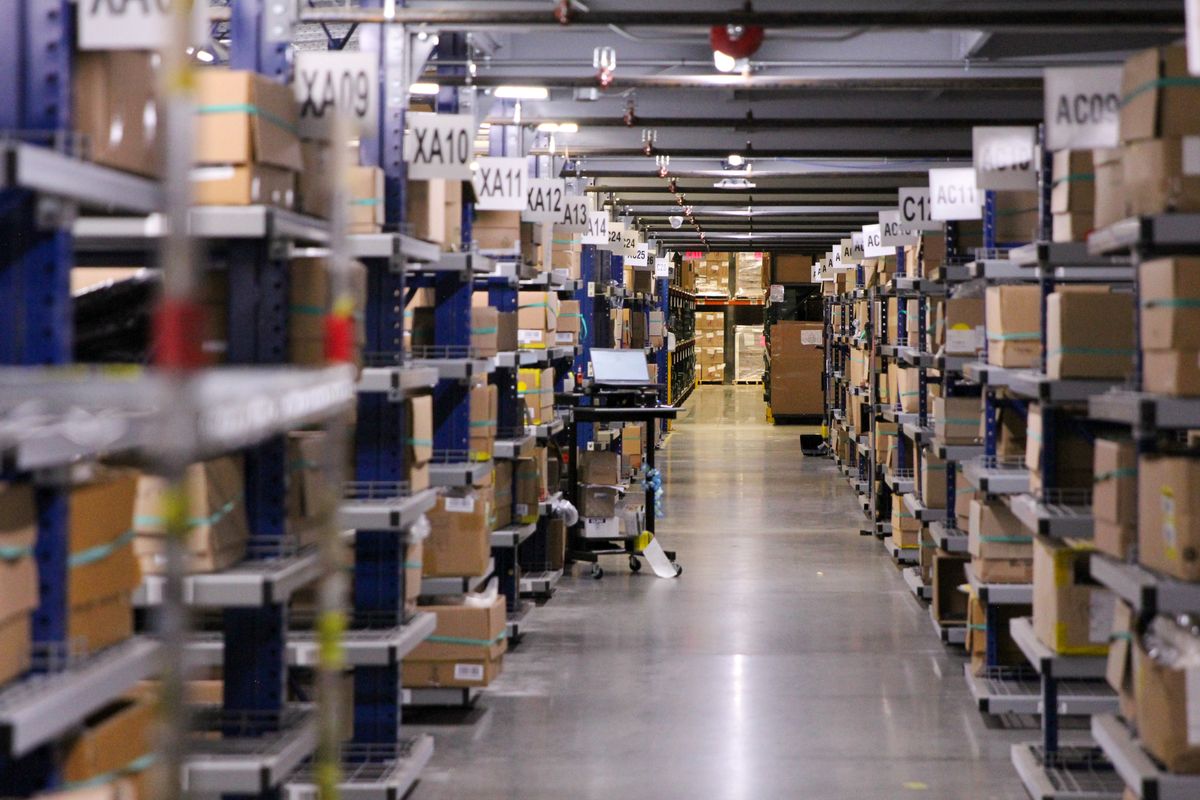
KAO Brands relied on Barrett Distribution Centers (BDC) to manage their entire fulfillment operation, using seven carton sizes across all e-commerce orders. BDC's engineering team used Paccurate to analyze a full year of order data, without touching live operations, to identify whether the existing box suite was the right one. The simulation flagged five of the seven cartons for replacement. The projected outcome: a 5.9% reduction in annual transportation costs, a 33% reduction in corrugated material usage, and a 34% net DIM weight reduction. For a 3PL, this is exactly the kind of value-added analysis that strengthens client relationships and demonstrates ROI without requiring a full operational overhaul. Read the full case study here.
Cartonization for Distributors
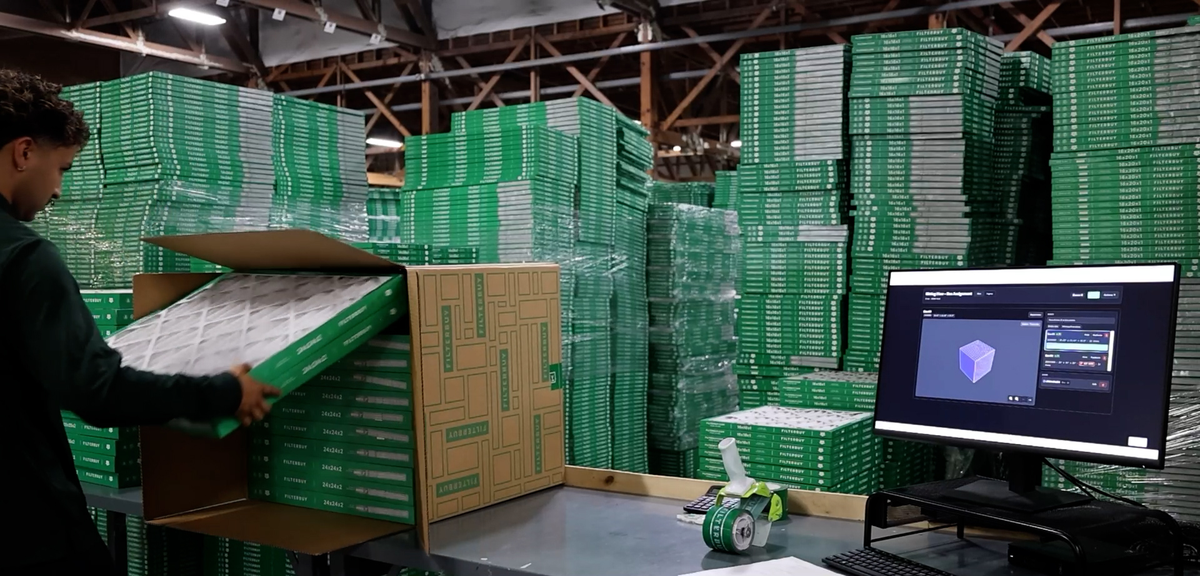
Filterbuy manufactures and ships over 100,000 air filters daily across nine facilities, with roughly 700 standard filter variations plus thousands of custom sizes. No two orders look the same, and a manual box selection process was generating excess DIM weight charges, warehouse space tied up in box inventory, and a damage return rate that kept climbing. After implementing Paccurate's Packing Control System, every order gets the right box, with no guesswork at the pack station. In collaboration with Packsize on-demand packaging automation, Filterbuy saw a 28.62% cube reduction, 87.20% void reduction, a 40.09% fill rate increase, and a damage return rate now running at less than half the company's internal target. Read the full case study here.

Cartonization for Retailers and Brands
Our Place ships over 1.2 million parcels annually across seven warehouses in the US, Canada, the UK, and Australia. Before Paccurate, incorrect box selection was generating real and quantifiable losses. As COO Ali Shahid put it: "Using incorrect carton sizes at just one of our warehouses for one week could result in a $10,000 loss, and if this happened across all of our warehouses for a year, losses could exceed $2 million." Our Place integrated Paccurate directly with their ERP to get real-time carton selection and 3D packing instructions at every station. They also implemented a daily review process, comparing actual boxes used against Paccurate's recommendations and requesting credits from their 3PL partners when discrepancies are found. PacSimulate supports ongoing carton suite optimization as their order volumes and product mix shift. Read the full case study.

Cartonization for E-commerce
Altitude Sports, a 100% online retailer shipping over 1.2 million orders annually, was experiencing consistent DIM weight charges on lightweight apparel orders, paying for air inside boxes rather than the actual weight of what they were shipping. After implementing Paccurate through their WMS partner Deposco, they encoded item-level packing rules for foldable and compressible SKUs, reducing the default toward oversized boxes. Fill rates increased 6% within the first month. Mailer utilization climbed from 60% to 78%, an 18% improvement, after PacSimulate identified additional mailer sizes to add to their lineup. Packing station training time dropped by at least 15% as packers followed instructions rather than making judgment calls. "I've done packing with and without Paccurate, and it would be hard to go back," said Francis Lapointe, Logistics Manager. Read the full case study.
For a full library of customer stories, visit our Case Studies page.

Cartonization for Cold Chain
A change in Daily Harvest's product set disrupted their existing cartonization algorithm, generating transportation cost overages that escalated with every order. Their SKU mix, cups, bowls, and dry ice, required nesting logic that hard-coded rules couldn't reliably capture. They considered building an in-house solution, but the complexity of 3D bin packing optimization made that path impractical. During the pre-sale evaluation, Paccurate processed 23,857 historical orders and identified an 18% improvement in carton selection using a compact geometry packing rule, translating to five-figure savings per month from day one of implementation. Daily Harvest now uses PacSimulate® on an ongoing basis to evaluate whether their current carton suite remains optimal as their product mix evolves. Read the full case study.
Glossary of Cartonization Terms
A reference for the vocabulary that comes up when evaluating and implementing cartonization.
Bin Packing Problem: A computer science optimization problem about fitting items into containers. Cartonization extends this for real-world cost variables.
Cartonization: The process of selecting the optimal box and packing configuration for an order, accounting for dimensions, business rules, and shipping costs.
Containerization: A broader logistics term for grouping items into containers. In WMS contexts, often less sophisticated than modern cartonization.
Cubing: Another term for cartonization, commonly used by packaging automation providers or regionally, for example, in the EU.
DIM Weight: Dimensional weight is a carrier pricing method based on package volume, not just mass. Oversized boxes trigger DIM weight surcharges.
Enterprise Resource Planning (ERP): An ERP is a software that manages and integrates a company's core business processes across functions like finance, procurement, inventory, order management, HR, and sometimes fulfillment in a single unified platform.
Fill Rate: The percentage of a box's volume occupied by items. Low fill rates signal inefficiency and increase DIM weight charges.
Order Management System (OMS): An Order Management System (OMS) tracks orders from placement through fulfillment. Cartonization engines integrate with an OMS to act on live order data.
Pack Rate: The speed at which a packing team fulfills orders. Effective cartonization improves pack rate by giving packers clear, step-by-step instructions. Often also known as throughput.
Packing Control System (PCS): A Packing Control System (PCS) gives packers real-time control over order packing. Built around an API-first cartonization engine, operators can create and manage their own packing rules, simulate changes to their packaging line-up, and monitor packing performance over time.
Rate Table: A carrier-specific schedule of shipping costs based on weight, dimensions, zone, and service level. Cost-aware cartonization reads rate tables in real time.
Stock Keeping Unit (SKU): A Stock Keeping Unit (SKU) is a unique identifier for each product variant. Cartonization systems need accurate SKU dimensions to pack correctly.
Void Fill: Material used to fill empty space inside a box. Better cartonization reduces void fill, cutting material cost and waste per shipment.
Warehouse Management System (WMS): A Warehouse Management System (WMS) manages warehouse operations. Most WMS platforms include basic volumetric cartonization.
Zone: A geographic region used by carriers to calculate shipping rates. Cost-aware cartonization factors zone into every packing decision.