How to Audit Your Packing Process for Savings
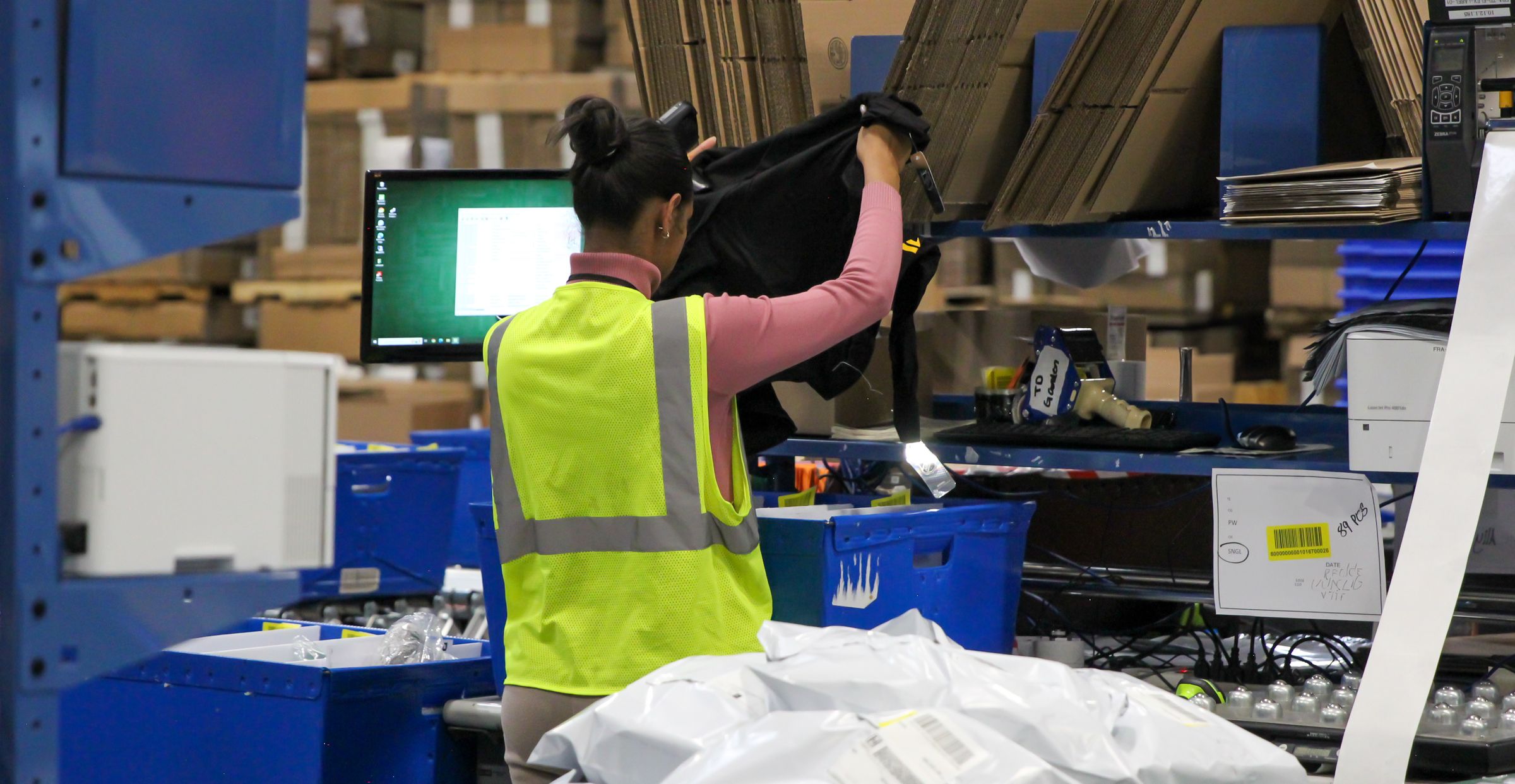
Staying ahead is a priority for supply chain leaders, but also a challenge, especially when technology is constantly adapting. When the focus is always on what's next, it's easy to forget to pause and evaluate the technologies and systems already in place.
Sometimes you have to slow down to speed up. That means finding what's dragging down the operation, and fixing it before trying to move faster. Packout is one of the areas of fulfillment that often gets overlooked. When in reality, evaluating processes at the pack station can uncover transportation cost savings and material reduction.
Here's how to get started with an audit and how to tell whether you're leaving money on the table. We put together a packing audit scorecard if you want to jump right in to see how your operation ranks.

Start With Accurate SKU Data and Dimensions
Data is the foundation of an operation. As AK Schultz of SVT Robotics put it at Cartonize, "Data is useless until it can be turned into information."
Every downstream system relies on accurate SKU data to make decisions, from warehouse slotting and packing algorithms to automation equipment. If that data is incomplete or inaccurate, every decision built around it becomes less reliable.
Capturing length, width, and height is a great first step, but dimensions alone still leave gaps. The physical size of an item isn't always representative of how it should be packed. Bowls nest together. Soft goods compress. A bag of screws should be measured by its contents, not the loose plastic bag around it.
That's where SKU profiling comes in. Profiling gives packing algorithms the context they need to understand how items behave during packing. The difference between an item's physical dimensions and its packing characteristics is often where wasted space, unnecessary packaging, and excess transportation costs originate.
Efficient packing starts long before an order reaches a packing station. Inventory data should be captured before products are ever stored, ensuring every downstream system is working from the same accurate foundation rather than making assumptions.
Reliable SKU data also powers the technologies that drive operational savings. Packing algorithms, cartonization software, on-demand packaging equipment, warehouse automation, and even slotting strategies all depend on accurate inputs. Without reliable data, you're solving a math problem with the wrong numbers or no numbers at all.
So what should you capture? On the dimensioning side, the length, width, and height of every SKU. On the SKU profiling side, common attributes include foldability, compressibility, whether an item has an internal cavity, and whether it's hazardous or fragile. Together, dimensions and profiling provide the complete picture packing systems need to consistently make the right packing decisions.
How to Improve Your Item Master Data-
Start by evaluating the state of your item master. If your SKU dimensions are already captured, the next step is profiling those attributes so your systems can understand how those items behave when packed. If your catalog is only partially profiled, or you have a large catalog and no dimensions, it may be worth bringing in outside help.
Paccurate partners with dimensioning providers like Cubiscan and QBOID to measure your current SKUs, capture key packing attributes, and help establish the processes needed to keep your item master accurate as new products are introduced. From there, the data flows into your system of record, whether that's a Warehouse Management System (WMS) or Enterprise Resource Planner (ERP), where it can power everything from packing algorithms to warehouse automation.
Building a complete, accurate item master is becoming more important as regulations like the EU's Packaging and Packaging Waste Regulation (PPWR) begin limiting unused space in shipped parcels. Getting your item master right lays the foundation for every packing decision that follows and is often where the biggest efficiency gains begin.
Packing Efficiency: Stop Leaving Box Decisions to Packers
When demand increases, the instinct is to add more associates to the picking and packing zones. But this is only a temporary fix. Adding more packers doesn't make the packing process immediately more productive, as seasonal labor takes time getting up to speed. If your packing process isn't explicitly clear, this might slow things down, not speed them up.
The differentiator is how much guidance packers receive. Across the facilities we've analyzed, operations tend to fall into a few buckets. Some leave packers to make their own decisions. Some rely on liquid fill cartonization, the volumetric approach built into most WMS, which "pours" an order's total cubic volume into the smallest box that can hold it. Others use cost-aware cartonization that gives packers clear instructions for every order.
Liquid fill can be enough for simple products shipped in small quantities. But it ignores item orientation, weight distribution, SKU attributes, and the financial variables that drive shipping costs, so its guidance only goes so far.
Manual box selection slows packing down, introduces inaccuracies and inconsistencies, and erodes margins over time. Paccurate has helped customers save up to 7% on transportation costs by automatically determining the right box for every order.
Automating Packing Decisions With Cartonization Software
Automating decisions at packout enables speed, accuracy, and consistency. Implementing cartonization software reduces wasted space inside every shipment, minimizing damage, packaging waste, and transportation costs by making better box choices from the start.
3D cost-aware cartonization takes packing a step further by accounting for your negotiated carrier rates when determining how an order should be packed, optimizing for both transportation and materials costs, not just volume.
Automating box selection makes your team more accurate and more efficient on every order they touch. If temporary labor is still part of your peak strategy, automated box assignment dramatically cuts the time it takes to train and onboard new hires by 15% in some cases, because the system, not the packer, is making the decisions.
How much is your packing strategy costing your operation? Find out by completing the packing scorecard.
Your Carrier Agreement: DIM Factor and Rate Structure
Major carriers, such as UPS and FedEx, can work for you or against you, depending on how you pack and the zone you’re shipping to. Operations that ship predominantly heavy items, or lightweight but voluminous goods, can find that the terms of their agreement work against their freight profile. We think of this as contract favorability, how "nice" your parcel agreements are to you across different packing scenarios. Traditionally, it comes down to two factors, your dimensional divisor (DIM factor) and your rate structure, that can be negotiated to protect you against inefficiencies.
A DIM divisor determines whether packages are billed on their dimensions or their actual weight. If you're packing poorly, a high DIM factor makes it less likely you'll get punished for it on your transportation bill. Your rate structure governs your negotiated rates and how carriers incentivize you to pack in particular ways.
These incentives differ more than most shippers realize. In one order we analyzed, FedEx's rate structure rewarded consolidating into fewer, smaller boxes while UPS's penalized dense, very full ones. The same order had a different optimal pack for each carrier, with a $1.93 gap on a single package.
Use Your Carrier Agreement to Your Advantage
If your DIM factor with your primary carrier is on the lower side (say, under 200), you may not have the most advantageous terms compared to other shippers, but there's still opportunity to capture transportation savings. Start by reviewing your current cartonization capabilities and considering automating the process with on-demand packaging machines, such as Packsize.
If your catalog skews toward larger, less-dense items, you might also benefit from negotiating for a higher DIM factor. That gives you protection against dimensional weight charges, whether they're coming from inefficient packaging or just the nature of bulky, lightweight commodities.
It may not always be worth putting all your negotiating energy into chasing a higher DIM factor. A high DIM factor is a genuine advantage, but you may capture more savings by automating packing and negotiating for lower minimum charges. A high DIM factor protects you against inefficient packaging, while a lower minimum charge incentivizes you to pack as efficiently as possible. The combination of the two is what maximizes your savings.
If you already have a 300+ DIM factor, this will shield you from being charged for inefficient packing, but it won't improve your packing efficiency. You should still consider automating your packing decisions with cost-aware cartonization because it weighs every shipping variable, including cost.
If you've already implemented or are rolling out cost-aware cartonization, that's exactly where you want to be. You're optimizing every order, and from there the gains come from the other categories.
Is your contract working for you or against you? The scorecard helps you find out.
Your Packaging Lineup: Right-Sizing Boxes and Mailers
When was the last time you evaluated your box suite? 1 year ago, 5 or even 10 years ago? If it’s not actually optimized for what you're shipping today, it could be costing you.
Most shippers use a best guess method to choose packaging sizes, mostly because there hasn't been a systematic way to figure out which sizes are best. The alternative has been hiring expensive consultants to run manual analyses and hand back sub-optimal recommendations. Neither approach keeps up with an operation that's constantly changing.
When the SKUs you ship change, your packaging should change with them. Your lineup needs to be as dynamic as your operation.
How to Find the Optimal Box and Mailer Suite
If you haven't reviewed your packaging lineup recently, now is the time. Reviewing and right-sizing your boxes on a regular basis can save you 10 to 20% on both shipping and corrugate costs.
If you have a large SKU catalog and a relatively high units-per-order average, it may be worth bringing packaging automation into your operation. Creating a right-sized box for every order, especially with an advanced cartonization engine doing the heavy lifting of deciding which items go where, lets you maximize both shipping and materials savings.
If you ship smaller items, or single item orders, have you thought about how adding a mailer to replace your smallest conveyable box? Eliminating the small item, big box problem not only improves your bottom line but delivers a better customer experience and reduces waste.
Simulation modeling tools such as PacSimulate capture on average an extra 10 to 15% in transportation and materials savings by evaluating thousands of historical shipments before they change a thing. Review your box line-up recommendations to determine the right mix based on your key performance indicators (KPIs) and even evaluate adding on-demand packaging before going through procurement.
Benchmark Your Packing Process
Savings is hiding in plain sight, from your data and packing process to your carrier agreement and your packaging lineup. Nearly every fulfillment leader who prioritizes examining their existing processes uncovers at least one area where they're leaving money on the table.
We built a packing audit scorecard to surface these inefficiencies. In a few minutes, you'll see where your operation stands across each of these categories and walk away with specific recommendations you can bring to your team today. Join the hundreds of operations leaders who have already benchmarked their packing performance and get a clear read on where your biggest opportunities are.
Frequently Asked Questions
What is a packing audit?
A packing audit is a review of your fulfillment operation to identify opportunities to reduce shipping costs, improve packing efficiency, and minimize packaging waste. It evaluates areas such as SKU data quality, box selection, cartonization, carrier agreements, and packaging inventory to uncover where money and materials are being wasted.
How do you improve packing efficiency in a warehouse?
Improving packing efficiency starts with accurate SKU dimensions and profiling, followed by automating box selection with cartonization software. Reviewing your packaging lineup, optimizing carrier agreements, and standardizing packing decisions also help reduce labor, shipping costs, and unnecessary packaging.
What is cartonization software?
Cartonization software determines the best box or mailer for every order based on item dimensions, SKU characteristics, packing rules, and shipping costs. Cost-aware cartonization also considers negotiated carrier rates to minimize transportation and packaging costs while improving packing consistency.
Why is accurate SKU data important for packing?
Accurate SKU dimensions and product attributes allow packing systems to make better decisions. Without reliable data, cartonization software, warehouse automation, and packaging equipment cannot accurately determine how products fit together, leading to oversized boxes, wasted space, higher shipping costs, and inconsistent packing.
How often should you review your packaging lineup?
Most operations should review their box and mailer lineup at least annually or whenever their product mix changes significantly. As inventory evolves, the packaging that once fit your orders may no longer be the most efficient, increasing transportation costs and corrugate usage.
How do carrier agreements affect shipping costs?
Carrier agreements influence shipping costs through factors such as dimensional weight pricing (DIM factor), minimum charges, and negotiated rate structures. Understanding how your contract interacts with your packing strategy helps identify opportunities to reduce transportation costs and avoid unnecessary shipping charges.
What are the biggest causes of unnecessary packaging costs?
The most common causes include inaccurate SKU data, manual box selection, outdated packaging sizes, poor cartonization, and carrier agreements that don't align with your shipping profile. Addressing these issues can significantly reduce transportation costs, packaging waste, and labor inefficiencies.
What should a packing audit include?
A comprehensive packing audit should evaluate SKU dimensions and profiling, packing processes, cartonization capabilities, carrier contracts, packaging inventory, box utilization, and shipping performance. Reviewing each area provides a complete picture of where operational improvements and cost savings can be achieved.