Building a Better Packaging Lineup: Choosing the Right Mailers for Cost and Efficiency
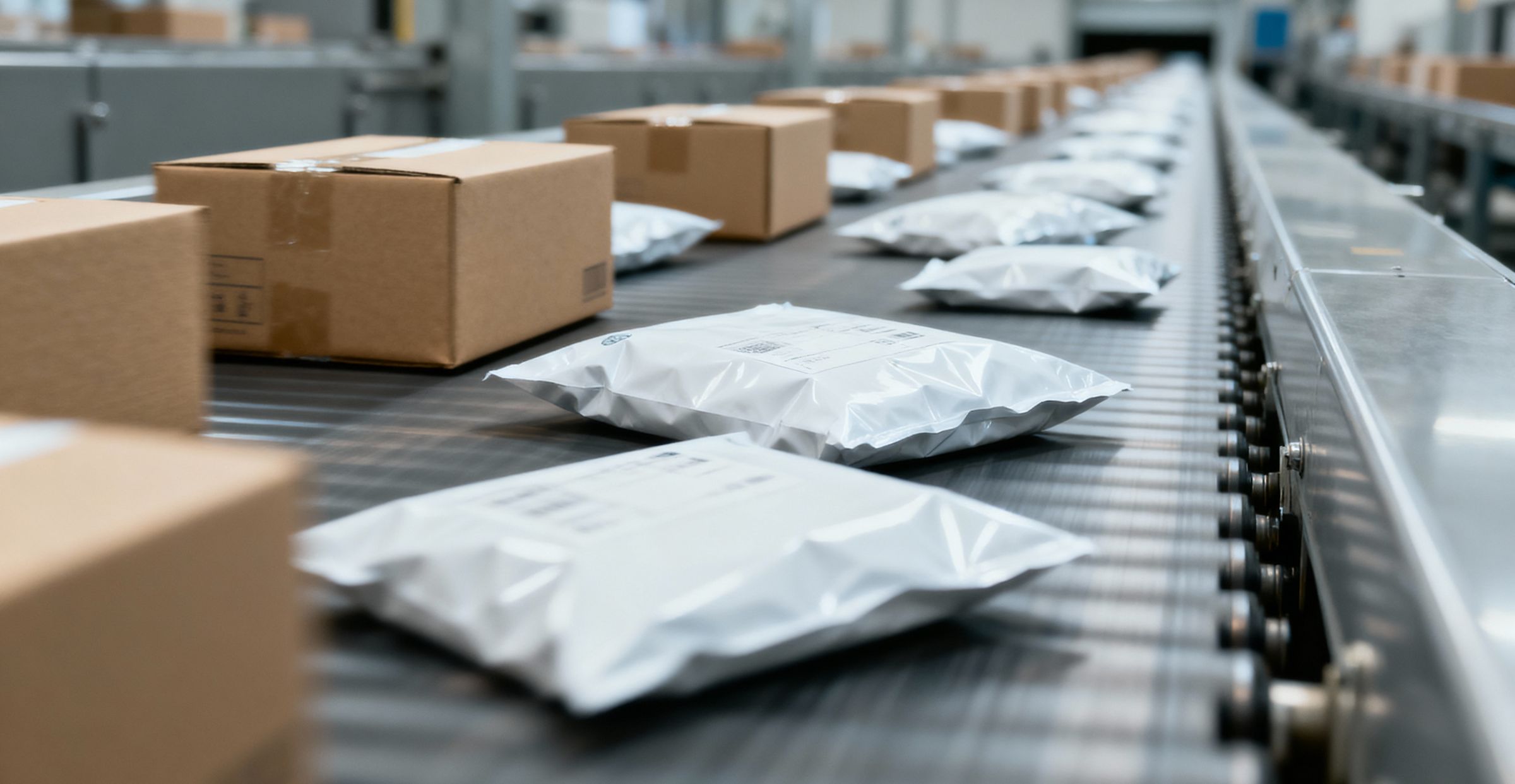
Many fulfillment operations have been using the same packaging lineup for years, even as their product mix changes. For retailers and e-commerce brands with high shipping volumes, outdated packaging suites can become a source of hidden costs. Packaging needs to be reviewed more than just once every few years.
Teams should continuously review their existing box suite and consider adding a mailer to create opportunities to reduce costs and improve volume utilization. The key is choosing the right type of mailer and knowing when to use it.
Understanding Mailer Options
What Are Poly and Paper Mailers?
There are two common mailer types used in North America, and the main difference between them is the outer shell material. Poly mailers are flexible envelopes made from polyethylene, while kraft mailers use a paper exterior made primarily from wood pulp.
Both are lightweight, single ply, and sealed with a peel-and-stick adhesive strip. Poly mailers are flexible and water-resistant, whereas kraft paper mailers are more rigid and hold their shape. Since neither option includes built-in protective materials, both are best suited for items that are already durable or come in sturdy retail packaging.
Expansion poly mailers include a bottom gusset that allows bulkier soft goods such as jackets, sweatshirts, and blankets to fit more easily. Standard poly mailers can be tightened around a product to eliminate excess plastic overhang and prevent loose material from snagging on conveyors during sortation. If that overhang exceeds the carrier threshold, surcharges may be triggered.
Poly mailers perform well when:
The product does not require impact protection
The retail packaging is sturdy
The item is soft or flexible enough to be compressed
The item is not sharp or heavy
Because poly mailers are prone to puncture, carriers set requirements to help ensure shipments remain intact through the delivery process. They are expected to be used only within basic weight limits, up to about 10 pounds, and have a minimum film thickness.
What is a Padded Mailer?
Padded mailers offer more protection than standard poly mailers. These semi-rigid envelopes contain internal cushioning such as bubble wrap, foam, honeycomb paper, or engineered fiber structures. The exterior can be either poly or kraft.
Unlike poly mailers, padded mailers are rarely folded or downsized because the built-in padding helps maintain their shape. They are a suitable choice for items that are not fragile enough for a corrugated box but need a higher level of protection than a flexible mailer provides. Padded mailers perform well when the item you are shipping is small, lightweight, and requires some impact protection.
Sustainable Mailer Options
In some operations, sustainability influences packaging decisions as much as cost and performance.
Poly mailers are made from polyethylene, a recyclable material, but can’t go into curbside bins and must be taken to participating retail drop-off locations. That extra step limits recycling because it’s not convenient for most customers. Even when a poly mailer is made with recycled plastic, the end-of-life challenge is the same.
Kraft mailers made from recycled fiber are generally accepted in curbside recycling, making disposal easier for customers. But because they are generally more expensive, heavier, not waterproof, and less automation-friendly than poly mailers, they aren’t always practical for every operation.
Biodegradable mailers made from materials such as corn starch face similar challenges. While they offer an appealing sustainability story, many customers don’t have access to proper composting and may not use them as intended.
These options can be costly and impractical at scale, making careful evaluation vital before integrating mailers into the packaging lineup.
Operational Benefits of Mailers
Mailers can reduce costs across several parts of a fulfillment operation.
Lower packaging costs: Mailers are typically less expensive than corrugated boxes.
Fewer consumables: Most do not require tape or void fill.
Faster cycle times: Eliminating box-building and packing increases throughput.
Better trailer utilization: Mailers take up less space, which improves trailer capacity and reduces carbon footprint.
Reduced transportation costs: Their lightweight design can help shipments avoid DIM weight when tightly packed.
Examples of Mailers Used Effectively
Cosmetic items in durable retail packaging often don’t require a full box. Without padded mailers, packers often default to the smallest conveyable box, which drives up cost and waste. When padded mailers are available, packers have an option that offers the right balance of protection, result is lower costs, faster packout, and better use of every cubic inch.
As your business changes, so should your packaging. If you have not reviewed your packaging mix recently, now is a good time to confirm whether your current lineup still fits what you ship. Packaging optimization software can show which mailers would work best for your operation and current SKU profile.
Packing Control Systems, also known as PCSs, can analyze shipment data to identify where mailers can replace certain box types or fill gaps in the current lineup. With clear data and the right options in place, teams can make more confident packaging decisions and introduce mailers for reducing costs and increasing efficiency.
Mailers do not replace boxes entirely, but they fill important gaps in a balanced packaging lineup.
Making Strategic Packaging Changes
Adding mailers to the packaging suite helps align packaging types more closely with product needs. When items go into the right container, the entire operation becomes more efficient. The result is lower costs, decreased cycle times, and better use of every cubic inch.
As your business changes, so should your packaging. If you have not reviewed your packaging mix recently, now is a good time to confirm whether your current lineup still fits what you ship today. A data-driven packaging evaluation can show which mailers would work best for your operation and current SKU profile.
Packing Control Systems, also known as a PCS, can analyze shipment data to identify where mailers can replace certain box types or fill gaps in the current lineup. With clear data and the right options in place, teams can make more confident packaging decisions and introduce mailers to reduce costs and increase efficiency.